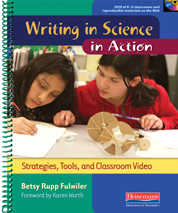
 Many of our teachers completed a book study using Writing in Science in Action by Betsy Rupp Fulwiler. This book provides a science/writing structure for teachers who are looking to teach students to write like scientists. In the book, she provides a detailed outline of how to implement her science/writing structure in your classroom including both a science session and writing session. During the writing session, students are encouraged to record what they learned during the science session.
 Fulwiler includes student writing samples, video clips, and characteristics of exemplar writing samples. More information and digital resources related to Writing in Science in Action can be found at http://www.heinemann.com/wisia/.
A few key ideas came out of our book study discussions. First, we realized we needed to start this type of scientific writing instruction early with our students if we want them to continue to develop these skills as they get older. Second, we recognized the importance of teaching our students how to write scientifically to be successful with the implementation of the Next Generation Science Standards and the Common Core State Standards. Finally, we realized we were not setting high enough expectations for our students when it came to writing in their science notebooks. We all agreed to begin to use our science notebooks as tools to help our students communicate their scientific thinking.
Resource
Fulwiler, B. R. (2011). Writingin science in action: strategies, tools, and classroom video. Portsmouth, NH: Hienemann.
